 Animal Academy
Hello! I'm Rosie, your galah guide. We've got a whole year of animals to explore together — let's go!
This book has six units — one for each part of the year. Work through them at your own speed. Read the stories, answer the questions, do the maths, and have fun with the drawing pages. There are no wrong answers here. If a bit is tricky, ask a grown-up, point, or draw your answer instead.
Sit alongside and take it gently — a page or two at a time. All ways of answering count: writing, pointing, drawing, or telling you the answer to scribe. Celebrate every try. The units follow the seasons but can be done in any order.
Let's start with the animals closest to us — our pets! I'm Rosie, and I'll be with you all year.
A pet is an animal that lives with people. We look after pets, and they become our friends. Pets need food, clean water, a safe home and lots of care. Some pets, like dogs and cats, love to play. Others, like fish and tortoises, are calmer. Looking after a pet teaches us to be kind and gentle every day.

Now let's go small — really small! Minibeasts are tiny, but oh-so-important.
Minibeasts are tiny animals like insects, spiders, worms and snails. Insects have six legs and three body parts. Spiders have eight legs. Some minibeasts help our gardens — bees carry pollen from flower to flower, and worms keep the soil healthy. Even the smallest creature has an important job to do.
Off to the farm! This is where lots of our food begins its journey.
Farms are home to animals that give us food. Cows give us milk. Hens lay eggs. Sheep grow wool that keeps us warm. Farmers wake up early to feed the animals and keep them healthy. The food we eat often starts on a farm, so we should thank the animals and farmers who help feed us.
Time for the cool customers — reptiles! They do things very differently to us.
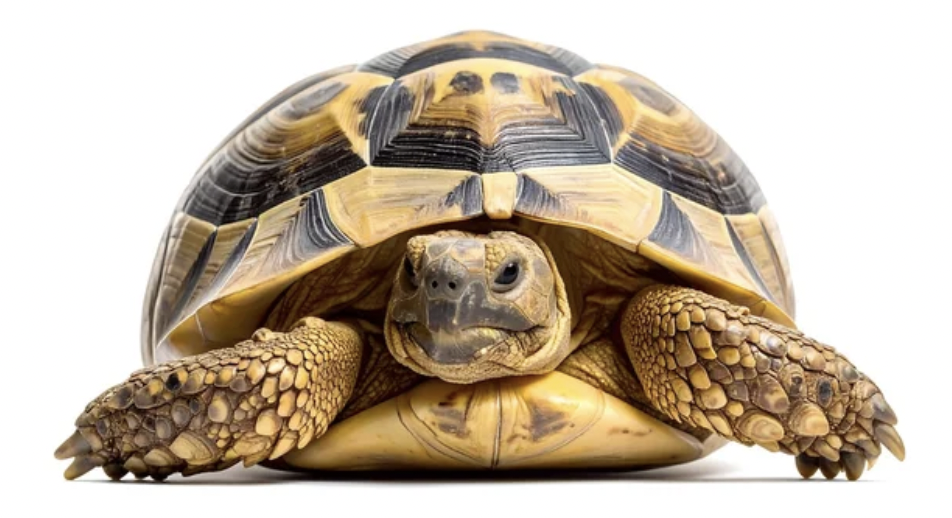
Reptiles are cold-blooded animals. This means they cannot warm themselves up inside the way we can. Instead, they bask in warm places to heat up, and rest in the shade to cool down. Snakes, lizards, tortoises and crocodiles are all reptiles. Most reptiles have dry, scaly skin — and a tortoise even carries its hard shell wherever it goes.
Let's travel the whole world! Animals live in amazing places, and they're built for them.
Animals live all over the world, in many different homes called habitats. A polar bear has thick fur to keep warm in the icy Arctic. A camel can store fat in its hump to cross the hot desert. A monkey has strong arms to swing through the rainforest. Each animal is perfectly suited to where it lives — this is called adaptation.
Our last unit, and the most important one — looking after animals and our planet. You've worked so hard!
Many animals in the world need our help. Some are losing their homes, and some do not have enough food. We can help by caring for nature, keeping it clean and being kind to all living things. People like vets, zookeepers and conservationists work hard to protect animals — and we can all do our bit, however small.